
Being of African heritage in the United Kingdom often means experiencing two very different environments. At home, young people feel supported, understood, and held to high standards, while at school they can sometimes feel overlooked or misunderstood.
This blog explores the experiences of young people of African heritage in schools across the North of England, as well as how their upbringing has impacted their ability to thrive in educational environments.
As part of a joint-university research project (York St. John University & Liverpool Hope University and Afrikindness, funded by the Institute of Social Justice), we interviewed around 40 young people about both their experiences at home and in school.
We asked questions about their education and how their racial identity shaped these experiences.
After analysing their responses, several common themes were identified.
Family and Expectations
Family was described by most participants as a source of love, support, and cultural identity. Many spoke about strong relationships with their parents, as well as the importance of faith, tradition, and community within their households.
However, love was often expressed through high expectations.
Many participants shared that they were expected to achieve highly in school, behave well, and pursue stable careers such as medicine, law, or engineering. While this can be seen as parents wanting the best for their children, it can sometimes come at the expense of young people’s own interests and ambitions.
On the surface, it seems only to reflect the aspirations that parents have for their children. However, it can also reflect the injustices parents themselves have faced.
African parents essentially use their hardships and experiences of discrimination as cautionary tales, trying to ensure that their children do not have the same experiences. It is a conscious defence mechanism against a system that has historically proven to undervalue young people of African heritage.
This means that young people are often encouraged to work harder, behave better, and stay composed in situations that are sometimes genuinely unfair. For example, some participants described being advised not to respond to racist comments, as they feared facing harsher consequences. This is backed by other studies, which suggest that black children and young people can be disproportionately blamed and sanctioned when incidents of poor behaviour occur. Furthermore, some participants described being advised to keep a low profile to avoid further exposure to danger, a notion prevalent among families seeking asylum.
Altogether, this framework doesn’t allow young people to fully express themselves, and it can lead to a lack of self-esteem, as well as an unwillingness to cooperate with the school system.

Pride
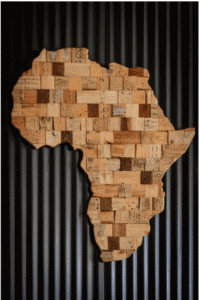 Africa is a diverse continent made up of many countries, cultures, languages, and histories, one that gained its freedom from its oppressors and has steadily begun to climb its way to stand amongst the greatest world powers.
Despite common stereotypes, many participants expressed strong pride in their heritage and identity. The research suggested that having an African or Black identity was an important source of strength. For many young people, it acted as a foundation that glued their values and decisions.
This sense of pride helped them stay connected to their culture, even when they felt misunderstood in wider society.
Formation
The findings also highlighted the important role of family in shaping identity.
There was particularly a strong theme of the familial and parental importance present in their identity, with both acting as key factors that forged the participants’ racial identity and safe havens that supported navigation of Black/African identity in a predominately white society and institutions, which are both capable of exhibiting a lack of understanding and indifference to those identities.
From this, it was concluded that whilst the African identity is made up of several components (like nationality and national origin, tribal identity, etc.), family links, and thereby cultural traditions, faith, and language were the cornerstones of their identity that guided them through life.
With these core components, creating and sustaining a strong sense of belonging to a close-knit community, in which participants feel rooted, is key to sustaining said identity.

Reflections and Conclusion
As young people of African heritage ourselves, these findings are not surprising.
Many of us have experienced similar expectations and conversations within our own families. This made the research feel more personal and relatable.
These findings suggest that there is still more work to be done in schools to create inclusive and supportive environments. What matters is that we keep talking about this and make sure that schools and parents work together, so that the school environment can match the one parents are trying so hard to nurture at home.
References
- https://researchbriefings.files.parliament.uk/documents/CDP-2023-0049/CDP-2023-0049.pdf
- https://www.nuffieldfoundation.org/wp-content/uploads/2022/10/%E2%80%98Race-disproportionality-and-diversion-from-the-youth-justice-system-a-review-of-the-literature.pdf
- https://www.nuffieldfoundation.org/wp-content/uploads/2022/10/%E2%80%98Race-disproportionality-and-diversion-from-the-youth-justice-system-a-review-of-the-literature.pdf
This blog article, co-written by our Research Ambassadors, forms part of the research outputs from Afrikindness’s research project on race, racism and education, delivered in partnership with York St John University and Liverpool Hope University, and funded by the Institute of Social Justice.
Read more about the research outcomes here:
Youth-Led Research Project
Temi Owolabi
 Temi Owolabi is a Year 12 student at Eton College, currently pursuing A-Levels in Mathematics, Chemistry, Economics, and Religious Studies. He demonstrates a profound interest in the intersection of science, ethics, and social justice, having roles in multiple of his schools’ science-related publications, as well as being a youth ambassador for the Children’s Commissioner for England. Temi’s research background includes investigating race and identity with Afrikindness and advocating for youth wellbeing through The Children’s Society. He is passionate about using interdisciplinary research to address complex global challenges. Temi aims to pursue a career that combines high-level scientific inquiry with impactful public policy and advocacy.
Oluwagbenro Adeniyi Oseni
 Oluwagbenro Adeniyi Oseni is a year 12 A-level student of Ossett academy and sixth form college where he currently studies Biology, chemistry and sociology as well as a youth ambassador at Afrikindness with aspirations to delve into the field of Medical science due to his innate interest in the innerworkings of the body, his desire to help people; and the ambition to increase the number of ethnic minority doctors in the united kingdom.
In the past few months Oluwagbenro has attended multiple workshops hosted by Afrikindness, to increase his repertoire of skills and to also experience different career paths and seek guidance through mentorship. He was also a guest at the diasporan mom podcast where he, with other youth ambassadors at Afrikindness spoke and discussed with the host about the topic of how diasporan youths feel about the guidance of their parents in navigating the Uk’s culture and school system. He enjoys reading, gaming and writing novels.